
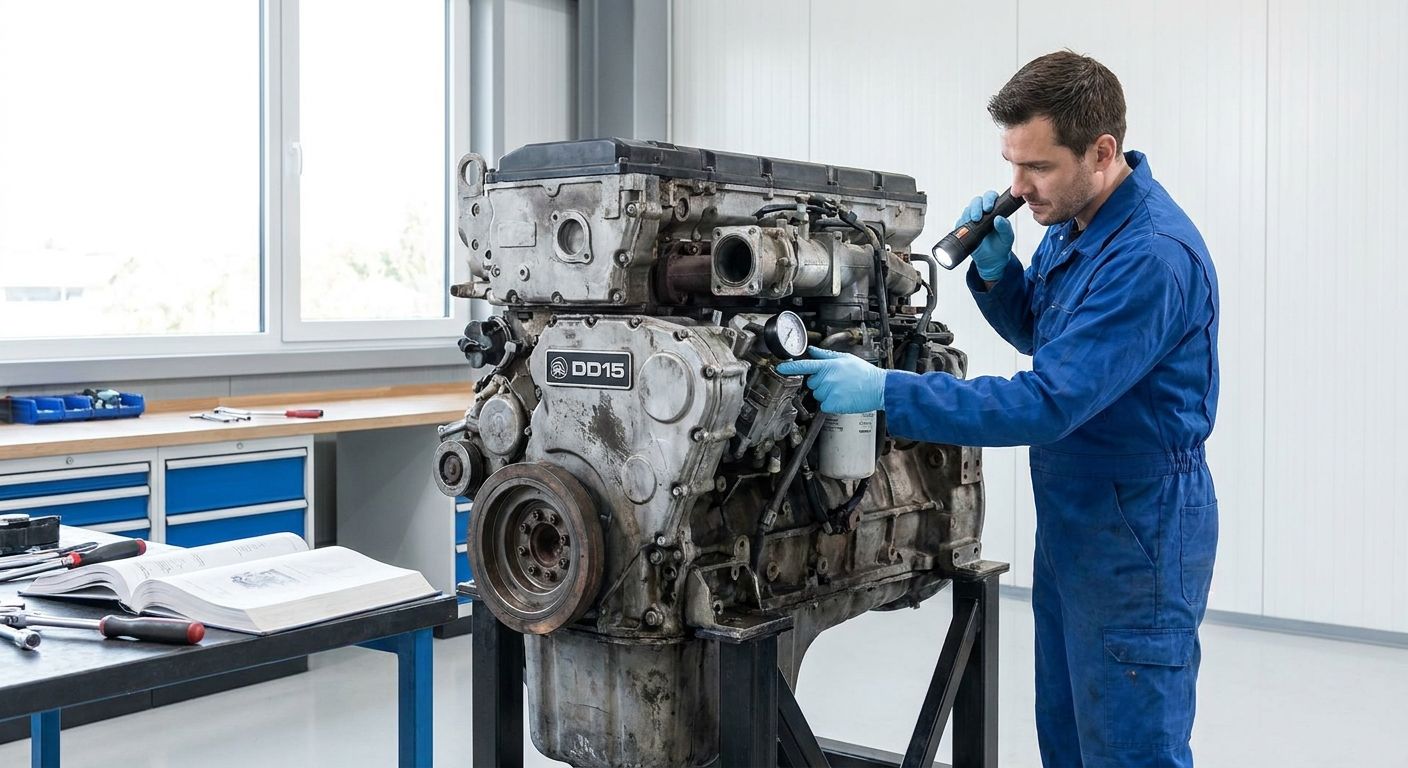
If you run a truck with a Detroit DD15, you already know it’s a strong engine. It pulls hard, it’s built to last, and when it’s set up right, it can be easy on fuel. But the EPA10 version added a lot of electronics and emissions hardware, and that’s where most of the confusion starts. People hear “Detroit Diesel DD15 EPA10 MCM ACM tuning” and picture very different things.
This guide covers what those modules do, what tuning really means on these engines, where owners get into trouble, and why having the right Detroit Diesel manuals on hand saves time and money.
What Makes the EPA10 DD15 Different
The DD15 is a 14.8-liter inline six. Depending on the rating, it puts out somewhere around 455 to 505 horsepower and well over 1,500 lb-ft of torque. Earlier versions met EPA07 standards using a diesel particulate filter (DPF) and EGR.
EPA10 went a step further. To bring NOx down, Detroit added selective catalytic reduction (SCR), which uses diesel exhaust fluid (DEF). That meant more sensors, more dosing hardware, and a dedicated computer to manage it all. If you’ve worked on both, you know the EPA10 truck feels like a different machine when you plug in a laptop.
Understanding the MCM and ACM
Before you change anything, it helps to know which module controls what. On an EPA10 DD15, three main controllers work together.
MCM (Motor Control Module) This is mounted on the engine and handles the engine itself: fuel injection timing and quantity, the turbo, EGR, and engine sensor inputs. When the engine runs rough, makes low power, or throws a fuel system code, the MCM is usually where you start.
ACM (Aftertreatment Control Module) The ACM is new with EPA10. It runs the aftertreatment system: DOC, DPF, SCR, and DEF dosing. It reads NOx sensors, exhaust temperature sensors, and DPF pressure, and decides when regens happen and how much DEF to inject. Most of the derate and “check DEF” headaches you’ll see come through this module.
CPC (Common Powertrain Controller) The CPC sits in the cab and handles vehicle-side settings: road speed limit, cruise control, idle shutdown, PTO, and similar parameters. It talks to the MCM and ACM over the data link.
Knowing this split matters. A lot of “tuning” questions are really CPC parameter questions, while a lot of performance complaints actually trace back to the ACM or a failing sensor.
What “Tuning” Really Means on a DD15
Here’s the honest part. On these engines, legitimate tuning falls into a few categories:
- Parameter programming. Adjusting road speed limits, cruise settings, idle shutdown timers, fan settings, and PTO behavior. This is done with Detroit’s DiagnosticLink software and is something fleets do every day.
- Rating changes. Detroit offers different horsepower and torque ratings for the DD15. Moving between factory-approved ratings is done through authorized dealers.
- Software updates and reflashes. Detroit releases calibration updates that fix drivability issues, improve regen logic, or correct known faults. Keeping MCM and ACM software current fixes more problems than people expect.
- Repairs and recalibration after parts replacement. Swapping injectors, a turbo actuator, NOx sensors, or a DEF doser often needs codes entered or a learn procedure completed.
What doesn’t count as legal tuning is disabling or removing emissions equipment. Deleting the DPF, SCR, or EGR, or reprogramming the ACM to ignore them, breaks the Clean Air Act in the US. The EPA has gone after both shops and owners with serious fines. It can also cause problems at inspection, with warranty, and when you try to sell the truck. If a deal sounds too good, it probably comes with a bill later.
The good news is that a healthy, properly maintained EPA10 DD15 with up-to-date software runs well. Most “it needs a tune” complaints turn out to be a clogged DPF, a bad NOx sensor, a sticking EGR valve, or a DEF quality issue.
Common Problems That Get Mistaken for “Needing a Tune”
Before anyone touches calibration, check these first:
- Frequent regens or high DPF soot load. Often caused by a leaking injector, EGR problems, or too much idle time.
- SCR efficiency faults. Bad DEF, a failing NOx sensor, or a crystallized doser can all set low-efficiency codes and lead to a derate.
- Low power under load. Check the turbo actuator, charge air leaks, and the fuel filter before blaming the software.
- Poor fuel mileage. Road speed settings, idle time, and tire pressure usually matter more than any reprogram.
- Intermittent derates. Wiring and connector problems near the aftertreatment are common, especially on trucks that see road salt.
Each of these has a specific diagnostic process. Guessing costs money. Following the right procedure doesn’t.
Why Detroit Diesel Manuals Matter So Much Here
On an older mechanical engine, an experienced mechanic could get by on feel. On an EPA10 DD15, that doesn’t work. You need wiring diagrams, fault code tables, sensor values, and step-by-step test procedures.
Good Detroit Diesel manuals give you:
- Fault code descriptions and troubleshooting trees for MCM and ACM codes, so you know what a code actually means and what to test first
- Wiring schematics for the engine harness and aftertreatment harness, which are a lifesaver when chasing intermittent faults
- Sensor specs and expected readings, so you can tell whether a part is bad or the problem is somewhere else
- Torque specs and service procedures for injectors, turbo, EGR, and aftertreatment components
- Programming and parameter information that explains what each setting does before you change it
For owner-operators, having the service manual means you can talk to a shop on equal footing. You’ll know whether that $3,000 quote makes sense. For independent shops, it means fewer comebacks and less time staring at a code with no clear path forward.
Matching the Right Manual to Your Engine
Detroit made changes between EPA07, EPA10, and GHG14 (and later) engines, so make sure the manual fits your build. Check:
- Engine model: DD15 (not DD13 or DD16, even though they share a lot)
- Emissions level: EPA10 is typically 2010 to around 2013 model year trucks
- Engine serial number: found on the engine label, useful for confirming the exact configuration
- Truck make: the DD15 went into Freightliner and Western Star trucks, and wiring on the vehicle side can vary
Having the wrong year’s manual can send you looking for a sensor or connector that isn’t there.
A Few Tips From the Shop Floor
- Always record the existing parameters before changing anything. If something goes wrong, you can put it back.
- Make sure batteries are fully charged before flashing a module. A voltage drop during a flash can brick an MCM or ACM.
- Use quality DEF and keep it out of heat and direct sun. Bad DEF causes more SCR faults than most people realize.
- Don’t clear codes and hope. Find out why the code set first.
- Keep up with software updates. Detroit fixes known issues through calibrations, and an outdated ACM can cause unnecessary regens.
Frequently Asked Questions
What is the difference between the MCM and ACM on a DD15 EPA10? The MCM controls the engine itself, including fuel injection, turbo, and EGR. The ACM controls the aftertreatment system, including the DPF, SCR, DEF dosing, and regen timing.
Is Detroit Diesel DD15 EPA10 MCM ACM tuning legal? Changing approved parameters, updating software, and moving between factory ratings is legal. Removing or disabling emissions equipment, or reprogramming modules to bypass it, is illegal in the US and can lead to large fines.
Can I change the road speed limit on my DD15 myself? Yes, if you have DiagnosticLink with the right access level. Road speed and cruise settings are stored in the CPC. Some fleet-locked trucks need a password.
Why does my EPA10 DD15 keep going into derate? Common causes include low SCR efficiency, a failed NOx sensor, poor DEF quality, a clogged DPF, or wiring faults in the aftertreatment harness. The fault codes and a proper service manual will point you to the cause.
Will a software update improve fuel economy? Sometimes. Updates can improve regen strategy and drivability. Bigger mileage gains usually come from speed settings, idle reduction, and keeping the aftertreatment healthy.
Which Detroit Diesel manuals do I need for a DD15 EPA10? At minimum, a service/workshop manual and a troubleshooting guide for your emissions level. Wiring diagrams for both the engine and aftertreatment are worth having, especially for electrical faults.
Can I use a DD13 manual on a DD15? Many procedures overlap, but specs, parts, and some calibration details differ. It’s best to use a manual written for the DD15 and your specific emissions year.
Final Thoughts
The EPA10 DD15 rewards owners and techs who understand it. Most issues come down to knowing which module is in charge, reading the codes correctly, and following the right test procedure. Skip the shortcuts, keep the software and aftertreatment in good shape, and keep reliable Detroit Diesel manuals within reach. Your truck will stay on the road longer, and your repair bills will make a lot more sense.